How To Fuel Your Triathlon (Sprint + Olympic)
By Craig Mabon
Training for your first triathlon?
Then you’ve probably spent weeks on swim, bike and run, and almost no time thinking about fuel.
You’re not alone.
Our coaches regularly start working with athletes doing three-hour rides who ask, “What do you mean, fueling?” Some don’t even carry water.
So here’s the beginner’s guide to triathlon nutrition for sprint and Olympic distance races, from Tom, our performance nutrition coach.
(Going longer than Olympic? Half and full Ironman fueling needs a lot more detail. That’s coming in part two.)
The golden rule: nothing new on race day
If you only remember one thing, make it this.
Nothing new or different on race day.
Race morning is stressful enough. Your fueling should feel familiar, controlled and boring. That means eating the same foods you’ve used in your long rides, brick sessions and any race replication sessions.
Stress and anxiety can raise your heart rate and put pressure on your digestive system. You don’t want a gut problem on your first triathlon.
Race morning nutrition: what to eat before a triathlon
Most triathlons start early, so you won’t have much time or appetite. But you still need to top up the liver glycogen that drops overnight.
The ballpark:
- Eat 1 to 2g of carbohydrate per kg of body mass, 1 to 2 hours before you’re in the water
- Keep it low fibre so it’s easy to digest
- Practise it in training first
For an Olympic distance race with a 6am swim, that means getting up around 4 to 4:30am. Good options include:
- Cereal, crumpets, toast or a bagel
- A liquid carb drink, which also helps with hydration
- A little banana, dried fruit or honey
Racing abroad? Do a bit of supermarket research beforehand so you can replicate what you’ve practised.
The carb primer
About 15 to 30 minutes before the swim, top up with something small. An energy gel, a Rice Krispie square, a bar or a sports drink all work.
You might get away without it in a sprint, but it’s useful for an Olympic. The swim can be followed by a long wait in T1, so you want to start fueled and energised.
Should you have caffeine before the swim?
It depends on you.
Caffeine can help with focus and energy, but the swim start is an anxious moment for a lot of people. For some athletes, high doses of caffeine make nerves and panic worse in the water.
Our advice:
- Have your normal morning coffee
- Skip the caffeine gels pre-swim if you’re prone to nerves
- Consider taking caffeine in T1 instead
Different products absorb at different speeds. A cup of coffee can take up to an hour to peak. Caffeine gum peaks about 10 to 15 minutes after you take it. Test whatever you plan to use in training.
The three pillars of race fueling
Tom calls these three cups: carbohydrate, fluid and sodium. We all empty and refill them at different rates, and that shapes our performance.
For sprint and Olympic races, the priority order is:
- Carbohydrate (most important)
- Fluid
- Sodium (least important, unless it’s long, hot or you’re slower)
Without carbs, you won’t finish, or you won’t finish well.
How many carbs per hour for a triathlon?
The number to remember is 60g of carbohydrate per hour.
- On the bike: aim for 60g every hour. That could be 30g every 30 minutes, or 20g every 20 minutes
- On the run: aim for around 60g per hour too, such as a gel every 30 minutes. You can get away with a little less if your bike fueling went well
If you can hit 60g per hour consistently, you’ll finish. Whether you finish strong or podium in your age group is another question.
Why 60g? Your body can use around 60g of glucose per hour, and it’s easy to work out. If you can’t hit it consistently in training, there’s no point chasing higher numbers.
Pros fueling at 100g+ per hour have trained their guts to do it. Going from nothing to 80g in one session is a recipe for a rough day.
You also don’t need fancy products. A basic isotonic gel does the job.
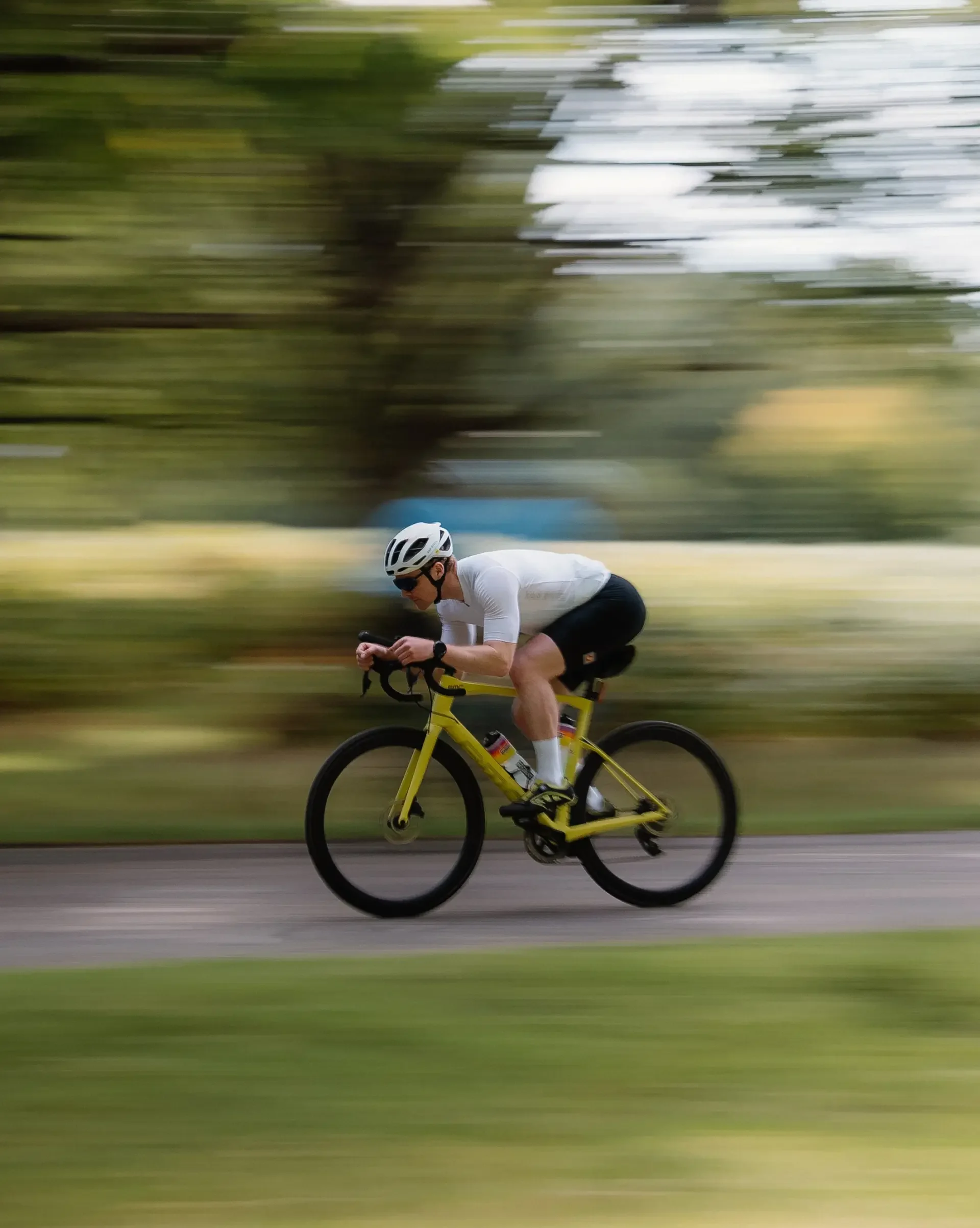
Fueling on the bike (for nervous cyclists)
Fueling on the bike is a skill, and it’s worth practising.
- Start with a drink mix. If you’re not confident with your bike handling, grabbing a bottle is easier than unwrapping a gel. It also covers carbs and fluids in one go
- Sip little and often. Take a few sips every 5 to 10 minutes, rather than relying on a gel every 30 minutes. It’s easy to lose the window to a hill or a corner and fall behind
- Use the course. Take on fuel on gentle uphills, when you’re moving slower and it feels safer
- Use a reminder. A watch or bike computer alert helps
- Practise in race conditions. Use similar kit, terrain and elevation if you can
Once you’re comfortable, build a simple system with a solid option early on the bike (a bar or chew), gels if you like them, and a drink mix for carbs and fluid.
Hydration for sprint and Olympic triathlons
Keep it simple.
Before the race:
- Drink 5 to 7ml of fluid per kg of body mass in the morning. For most people that’s 400 to 800ml
- You don’t need three litres of water. Don’t feel heavy and sloshy at the start
- Check your urine colour
During a sprint:
- Sip to thirst
- Carry a bottle on the bike, and grab a drink or two at aid stations on the run
During an Olympic:
- Sip to thirst is still usually enough
- If it’s warm (around 18 to 20°C and above), aim for roughly 400 to 600ml per hour
- If you want more precision, weigh yourself before and after a session. Aim to replace about 50 to 75% of what you lose
If you’re slower, racing midday or in the heat, add a little salt, squash or an electrolyte tablet. It can help fluid uptake, and plain water isn’t everyone’s favourite.
Keep it simple
Less is more.
You should be able to say what you’re taking in each hour without thinking. For example: “Hour one, this. Hour two, that. Run, a gel every 30 minutes.”
Too much choice makes things complicated. Plenty of athletes have finished Ironmans and ultras on one gel, one chew and one drink mix.
Know the basics, practise them, and you’re already ahead of most people on the start line.
Want help fueling and training for your first triathlon?
Nutrition is one piece of the puzzle.
At OMNIA, our coaches are athletes who’ve done the races you’re training for. We build structured, flexible plans around your goals, your schedule and your life, covering training, strength and fueling.
 How to Warm Up as a Hybrid Athlete
 The BEST Advice for Heavier Runners
 Should Your First Triathlon Be an Ironman?