Training As You Get Older: What Actually Changes (And What Doesn’t)
By James Blanchard
Let me be upfront about something before we get into this.
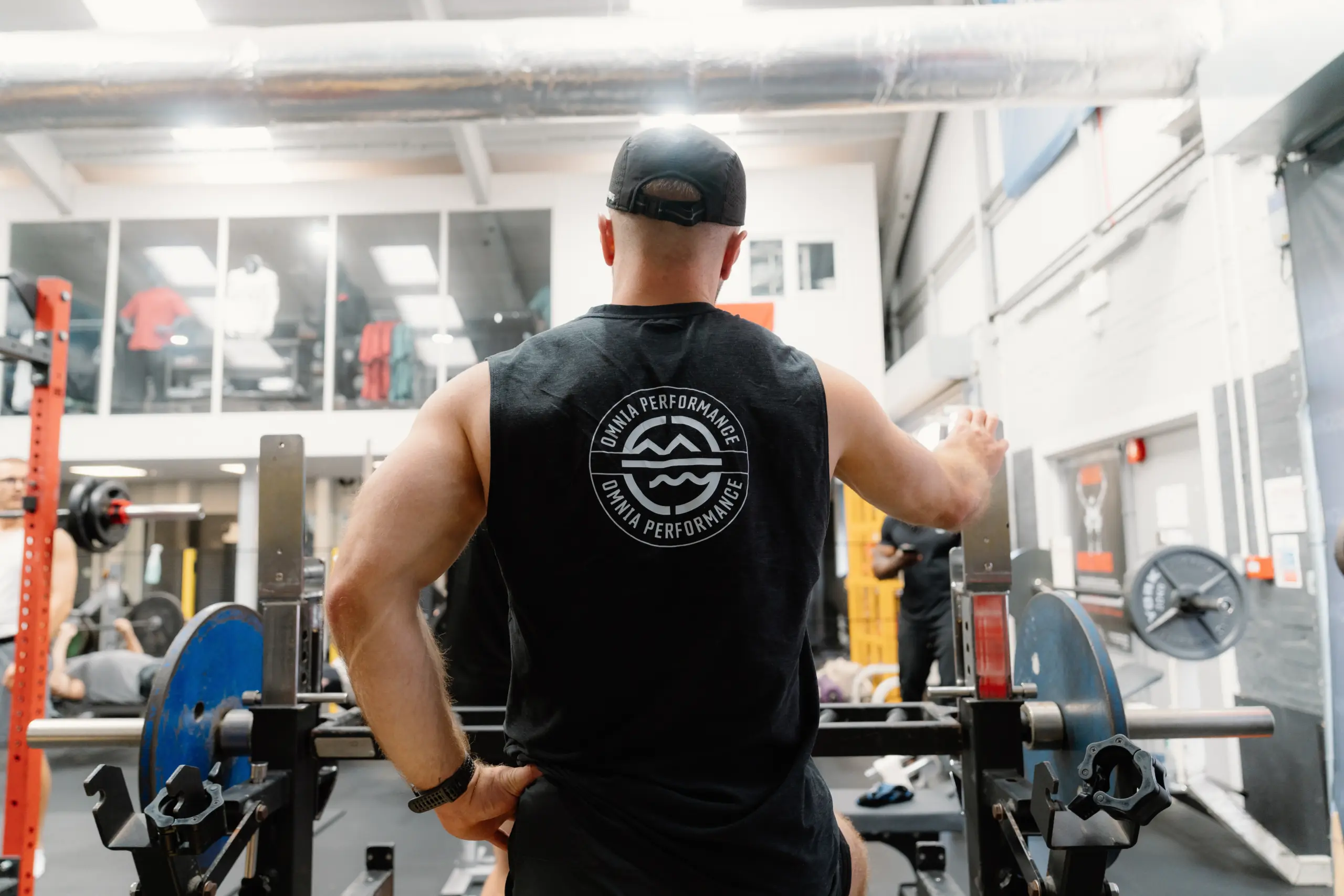
I’m 36. So if you’re in your mid-fifties and crushing it as a masters athlete, I’m probably not your guy for lived experience. But I am qualified in the way that matters for a lot of you – I’m right in the middle of it.
I’m past my physical prime on paper. I’ve got a few greys coming through the beard. The Instagram algorithm has started targeting me with hair loss clinics. And I’m getting the odd ache and pain that just wasn’t there when I was 25.
But I’m still pushing my limits, still competing with myself, and still trying to improve. And that’s exactly what this is about.
Because most of the content out there on training and age is either weirdly bleak or it’s watered-down, wishy-washy advice dressed up as wisdom. Stuff like “just listen to your body” or “train smarter, not harder” or “have you tried yoga?”
None of that is necessarily wrong. It’s just not very useful.
So let’s actually get into it.
What Physically Changes As You Age
Most people have a vague sense that training gets harder as you get older without really understanding why. And I think that vagueness leads to bad decisions.
On strength: The data shows you tend to peak in strength sports in your early-to-mid thirties. But here’s the bit most people miss – the decline isn’t a cliff edge. There’s no gear shift at 35 where your body just stops responding. Research tracking competitive powerlifters over 17 years found the strength curve looks more like compound interest in reverse: grows fast early, then flattens gradually over time.
And this is the part that should genuinely change how you think about all of this: the decline most people associate with getting older is almost entirely driven by inactivity, not age itself.
Masters powerlifters over 70 were losing strength at about a third of the rate of their non-training peers. Same age. Completely different trajectory. Just because they kept showing up.
We’ve seen this firsthand at Omnia. Athletes in their 80s still adding weight to the bar, still hitting personal bests. That’s not unusual. That’s just what consistent training across a lifespan actually looks like.
On your nervous system: The age-related decline in strength isn’t primarily about your muscles shrinking. It’s what happens to your nervous system – specifically, the nerve cells that fire your fast-twitch muscle fibres start dying off. Other nerve cells try to pick up the slack, but those orphan fibres get converted and you lose that higher gear. Your ability to produce force quickly – sprinting, reacting fast, catching yourself when you trip – that declines faster than raw strength, which itself declines faster than muscle size.
For anyone doing hybrid training, that’s something worth actively working against.
The good news: heavy resistance training acts almost like a firewall. It signals back up the chain – these fibres are still being used, let’s keep them. Lifelong strength athletes, when you look at their muscle tissue under a microscope, have a fibre distribution that looks more like a young person’s than a sedentary person of the same age. You can’t stop the clock completely, but you can significantly slow it down.
On connective tissue: Tendons and ligaments adapt to loading on a much slower clock than muscle. Muscle strength can improve noticeably within weeks. Tendons take more like six to eight weeks before you see measurable change. When you’re young and training hard, muscle races ahead and that mismatch – strong muscle, tendons still catching up – is where overuse injuries live. As you get older, that margin for error narrows. You can still train hard. You just need to be more deliberate about how load accumulates over time.
The Real Problem Isn’t Your Age
This is the bit that a lot of training content ignores.
There’s a tendency to treat training as you age like a purely physical problem. But for most people in their thirties and forties and beyond, the body isn’t the limiting factor. Life is.
Think about your training capacity like a bank account. Every session is a withdrawal. Sleep, nutrition, stress management – those are your deposits. When you were 22 with minimal obligations, you were topping that account up consistently. It was healthy.
Now you’re running businesses, raising kids, managing teams, dealing with aging parents, carrying a constant low-grade cognitive load that just wasn’t there before. The training load might be identical to five or ten years ago, but your ability to absorb it has completely changed because everything else around it has changed.
Try spending £1,200 from a £1,000 account and you’ll end up in overdraft. That’s when problems happen.
For me personally, this is exactly where it shows up. There are weeks when everything clicks – I recover well, I feel sharp. And there are weeks where a session that would have felt like a seven out of ten effort suddenly feels like a nine, or I can’t complete it at all. The weight on the bar hasn’t changed. Everything else around it has.
The solution is sometimes to push through it. If we stopped every time things felt a bit harder, we’d never get anywhere. But sometimes the smart move is to dial back the load – intensity, volume, or both – and protect the training week rather than one individual session.
If your environment isn’t right (sleep, nutrition, stress), fix the inputs before tearing the programme apart. If the environment can’t be fixed right now, the programme needs to come down to meet it. What you shouldn’t do is stay exactly where you are and wonder why nothing is working.
What Doesn’t Change
Here’s what I want to be clear on: this isn’t a list of reasons to expect less.
The actual biology of adaptation does not change as you get older. The systems that drive progress – your nervous system learning to use your muscles more efficiently, the muscles growing, your tendons and bones adapting – none of that switches off. None of it changes mode. It runs continuously across your entire training career.
What changes is how much room is left between where you are now and where you could theoretically get to. As that gap closes, progress slows. But the machinery? Identical.
So if you hit a plateau at 37, it’s probably not because your body has decided to stop adapting. It’s more likely one of three things: you’ve accumulated training history and need to shift something to move the needle, your recovery environment is compromised (life, sleep, nutrition), or your programme has gone stale. All of those things are fixable.
And here’s something worth sitting with: an experienced older athlete has things a 22-year-old doesn’t. Better technique, built over years. A more accurate sense of how hard you’re actually working. A broader library of movements to draw from. The ability to self-regulate rather than just bury yourself and wonder why something breaks.
That’s not nothing. Used properly, it’s a significant advantage.
Adjustments Worth Making
None of these involve just dropping intensity or accepting less. They’re just sensible levers.
Be more deliberate about exercise selection. Classic barbell work carries a systemic cost that compounds over time. If you’ve been squatting and deadlifting heavy for 15+ years, your joints have absorbed a lot. That doesn’t mean stopping – it might just mean shifting the ratio of free weight to machine work, particularly on lower body days. Similar stimulus, meaningfully less overall stress.
Consider training frequency over volume. Strength is as much a skill as a physical quality. If something’s stalling, the answer isn’t always more volume crammed into one session. Try spreading the same work across more frequent, shorter hits. Four sets Monday and Thursday could become one or two sets across six days. Same total work, better reinforcement of the movement pattern.
Find your weak links and go after them. Every experienced athlete has weak points they’ve been quietly avoiding for years. A powerlifter who hates benching because of their build. A hybrid athlete who’s neglected single-leg work. An endurance athlete who’s never done serious posterior chain training. Those weak points don’t disappear with age – they become higher risk. A focused block on something you’ve been dodging can unlock progress you weren’t expecting.
Less volume, more quality. Sometimes experienced athletes need less volume, not more. Not because the body can’t handle it, but because they’ve quietly drifted away from training with real effort. Sets drifting further from failure. Rest periods getting shortened to fit more in. That intent gets diluted. Fewer sets with real purpose is often worth more than high volume you’re just going through the motions on.
Sleep and nutrition are non-negotiables. You’ve heard this before, but it gets deprioritised by busy people. Sleep is the biggest recovery variable. If you’re routinely on four or five hours and training’s stalling, that’s probably your answer, not the programme. On nutrition: chronic underfuelling while trying to stay lean while training hard while living a stressful life grinds you down over time. Pick a clear priority and give it the resources.
What I’d Tell My Younger Self
Build consistency early. Don’t ego lift. Don’t max out all the time. Understand how to balance training stress rather than just trying to out-recover a brutal workload.
But the biggest one: readjust your expectations around the timeline.
When you’re young and progress is fast, you get used to that feedback loop being short. Do the work, see a result. As your training age increases, that loop gets longer. You might do everything right for six to eight weeks and see almost nothing – and then things shift all at once. That’s not failure. That’s just what non-linear progress looks like when you’ve been doing this for a long time.
Measure progress on a longer timeline. Stay curious about the training rather than just executing it on autopilot. And keep investing in the things that don’t show up in a logbook – sleep, stress management, showing up consistently over months and years.
The athletes I work with who are still making real progress in their forties and fifties aren’t doing it by training harder than everyone else. They’re doing it by protecting the things that let the work actually land.
There’s a real difference between training hard and training intelligently. The goal is to be both.
If that’s something you’re working through – how to keep making real progress despite the constraints of real life – that’s exactly what we do with athletes at OMNIA.
Find out more about Omnia 1:1 Coaching here.
Or, if you’d like an introduction to hybrid training – you can download our free hybrid training guide here.
 VO2 Max Explained: What Hybrid Athletes Need to Know
 The Metrics That ACTUALLY Matter
 How To IMPROVE Your Cycling