Should Your First Triathlon Be an Ironman?
By Kieran Richardson, Coach at OMNIA Performance
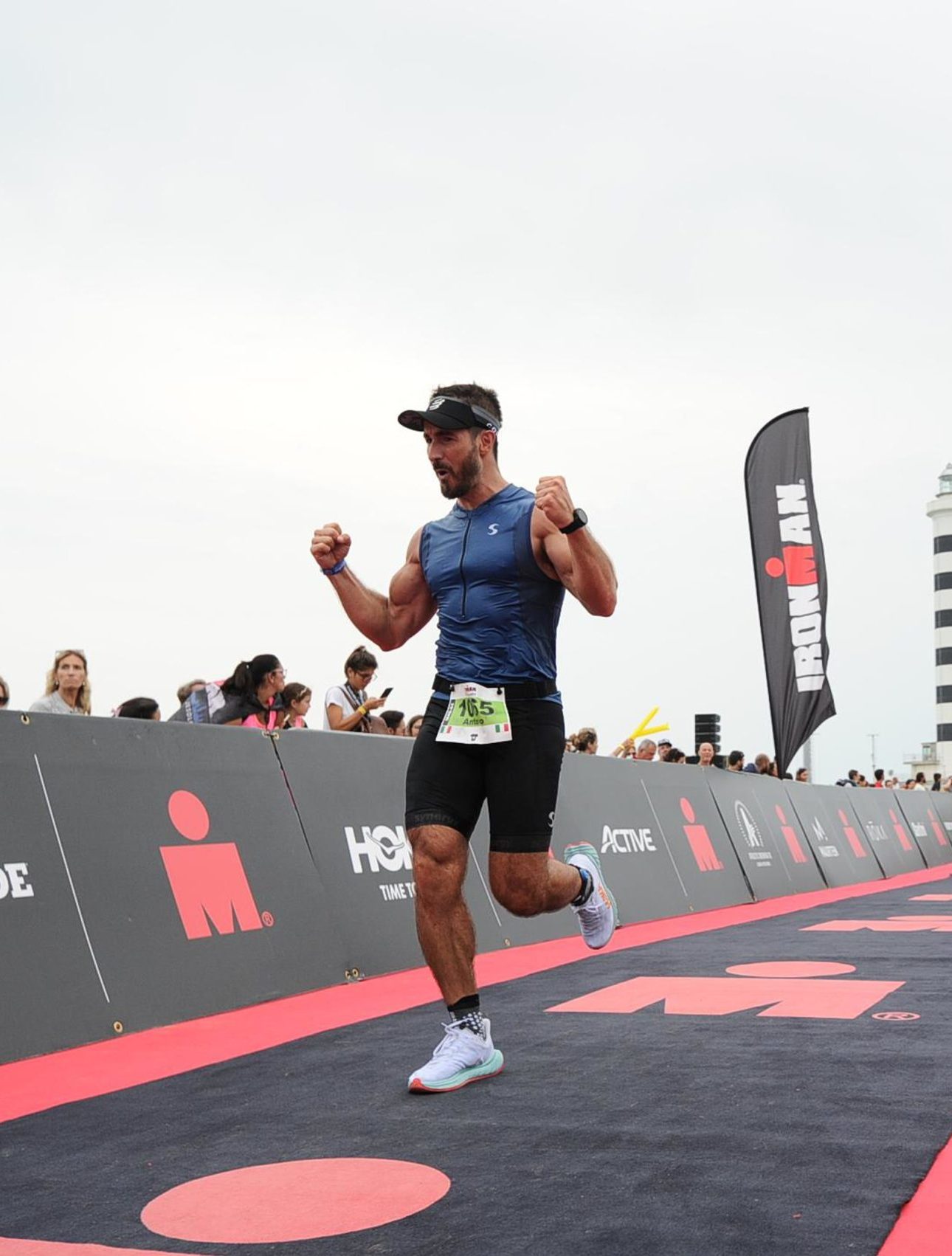
Scroll social media for long enough and you’re sure to find plenty of the “my first triathlon was an IronMan” or “3 months to IronMan” type posts, where someone goes from zero to 140.6 miles with no shorter races in between and it gets presented as the ultimate flex.
We don’t believe that’s the case, and if you’re thinking about training for one, it’s worth understanding why, because the reasons go a lot deeper than “you should build up gradually.”
The short version
- For most people new to endurance sport, an Ironman is not a good first triathlon.
- Most people who complete an Ironman as their “first triathlon” already have years of running, cycling or other endurance training behind them.
- Shorter races teach you skills you can’t fully learn in training, like how the transition areas work.
- Nutrition is the single biggest risk in an Ironman, and there’s no shortcut to learning it.
- Mistakes in an Ironman are expensive, once you add up the entry fee, kit, travel and months of build-up.
- If you’ve got a deep endurance background and a year or more to build, it’s a different conversation.
Can your first triathlon be an Ironman?
It can, and it has been for some rare cases we’ve coached, but for most people it absolutely shouldn’t be.
If you’re new to endurance sport, our advice is to build through shorter distances first. That’s not because you won’t be capable of the distance eventually, but because skipping those races means skipping the steps that make Ironman day safer, more affordable and a lot more enjoyable.
What don’t “first triathlon Ironman” posts on social media show you?
What rarely makes it into the caption is that almost nobody attempting an Ironman as their “first triathlon” is starting from zero. Scratch the surface and you’ll often find a training Instagram, a running history, years of cycling, or a background in another endurance sport entirely.
They may not have raced a triathlon before, but they’ve trained for endurance, often extensively. That’s a very different starting point to someone with little athletic background deciding their first ever multi-sport event will be a 2.4-mile swim, a 112-mile ride and a marathon to finish.
And crucially, the version of the day you see online is rarely the whole story. The struggle, the near-DNF and the parts that weren’t much fun in the moment tend not to make the highlight reel.
Why does skipping shorter triathlons cost you more than you think?
Skipping shorter races means you miss the chance to find out whether you enjoy the sport, learn the practical race-day skills, dial in your nutrition and build the mental toolkit, all before the stakes are high.
Will you actually like the sport?
Triathlon is expensive to get into and even more expensive to fall out of love with. Have a look on any secondhand marketplace and you’ll find no shortage of barely-used tri bikes captioned “bought for my Ironman, selling because I’m done”, which tells you plenty of people are spending serious money on a sport they haven’t given themselves the chance to enjoy yet.
Shorter races let you test that properly. Do you love the training process, the community and the suffering, or did you just love the idea of finishing one big race and being able to say you did it?
What skills do you only learn by racing?
Things like navigating the transition area processes, basic bike maintenance, fixing a puncture mid-race, and managing nutrition and hydration six, eight or ten hours into moving can only really be learned by racing. You pick them up by making small mistakes in low-stakes events and fixing them before it matters.
Skip straight to an Ironman and your first puncture might come in the middle of a 112-mile bike leg you paid hundreds of pounds to start. One of our coaches has seen exactly that end someone’s race: a completely avoidable DNF caused by inexperience rather than a lack of fitness.
Why is nutrition the biggest risk in a first Ironman?
Nutrition is the biggest risk because there’s no universal fuelling formula, and the only way to find out what works for you is trial and error over many long efforts.
What works for one athlete won’t work for another, and even the details, like which products you use and how many grams of carbohydrate you take per hour, take real time to dial in. The only way to learn what your gut can handle at hour nine is to have been somewhere resembling hour nine before. Shorter races and long training sessions give you the runway to build to that, but a first-ever Ironman doesn’t.
Why does the mental side matter so much?
The mental side of endurance racing is a skill in its own right, and like any skill it’s built gradually rather than overnight, even though physical fitness tends to get all the attention.
It means learning to break a race into manageable chunks, learning to push on when your brain starts screaming at you to stop, and learning to pace yourself so you don’t blow up in the first half and crawl through the second. Athletes build these skills over years of shorter events, and you can’t download them the week before your first big race.
Without that toolkit, the point in an Ironman where things get hard (and they will) becomes far harder to push through than it needs to be.
How much does a failed first Ironman really cost?
A failed first Ironman can cost you the entry fee, your kit, your travel and months of build-up, all at once.
Ironman entry fees alone are significant before you’ve bought a single piece of kit, a tyre or a nutrition product, let alone covered travel and accommodation. So a mechanical issue, a nutrition failure or a DNF caused by inexperience doesn’t just cost you the day, it costs you everything you put into getting there.
Build up through shorter, cheaper races first and you’re not gambling that entire investment on lessons you haven’t had the chance to learn yet.
What about people who smashed their first Ironman?
They definitely exist, but the pattern behind them is almost always the same: a deep, often multi-year background in another endurance discipline like ultramarathons, competitive running or serious swimming volume.
That background built the aerobic base, durability and mental resilience an Ironman demands, even without any triathlon-specific racing experience. If you’ve got a genuine training history like that and you’re building towards an Ironman over a year or more with the volume to match, then that’s a different conversation. The exception isn’t “no training required”, it’s “different training, and still a lot of it.”
For almost everyone else who’s genuinely new to endurance sport, with no long-distance racing or training history, the maths just doesn’t add up in your favour. This is particularly true for those without an extensive swimming background, as the risk of DNF’ing the swim cut off are very real if you rush straight to the full distance.
What are the benefits of building up through shorter triathlons?
Building up through shorter triathlons helps you get more out of the whole process.
Progressing through shorter distances first means:
- You develop a real love for the sport, not just for the idea of finishing one race.
- You build the physical and mental skills that make race day far more enjoyable.
- You reduce the financial and physical risk of a single, high-stakes, high-cost event.
- You give yourself more milestones to chase, rather than peaking too early and running out of goals.
Here’s a simple way to think about it. The race itself is only ever going to be somewhere around 10-16 hours of your life, whereas the training that gets you there (the months of early mornings, the discipline, and the person you become along the way) is the actual achievement. Rushing straight to the finish line skips the part that was supposed to be the point, and reduces how many opportunities you get to push through discomfort in training and experience the personal development that comes with it.
Frequently asked questions
Can I do an Ironman as my first triathlon?
You can, but if you’re new to endurance sport, our coaches recommend building through shorter races first. It makes Ironman day safer, cheaper and more enjoyable.
Who can do an Ironman as their first triathlon?
Usually people with a deep, multi-year background in another endurance sport, like ultrarunning, competitive running or high-volume cycling, who build towards the Ironman over a year or more.
What distance should my first triathlon be?
A shorter race, such as a sprint or Olympic distance, lets you learn transitions, fuelling and race-day skills with far less at stake. From there, you can build towards longer events.
Why is nutrition such a big risk in an Ironman?
There’s no universal fuelling formula, and the only way to learn what your gut can handle many hours into a race is to practise it in long sessions and shorter races first.
What skills should I learn before doing an Ironman?
Basic bike maintenance, fixing a puncture under pressure, fuelling and hydrating over many hours, pacing, and breaking a long race into manageable chunks.
How long does it take to train for an Ironman?
It depends on your background. Even athletes with a strong endurance history typically build towards one over a year or more, and if you’re new to the sport, it’s worth giving yourself a season or two of shorter races first.
The bottom line
If you’re new to endurance sport and considering an Ironman as your first triathlon, our honest advice is simple: don’t. That’s not because you won’t be capable of the distance eventually, but because you’d be skipping the steps that make the day itself safer, more affordable and genuinely more enjoyable.
Build through the shorter distances, and learn to fix a puncture before your bike leg depends on it. Dial in your nutrition somewhere that a mistake costs you a bad training session rather than a DNF, and give yourself time to actually fall in love with the sport before you commit to its hardest single day.
The Ironman will still be there, so give yourself a season or two to be properly ready for it.
Want help building towards your first triathlon or Ironman?
Whether you’re building towards your first sprint triathlon or your first Ironman, OMNIA’s 1:1 coaching gives you a structured plan that starts from where you are right now.
Apply for OMNIA 1:1 coaching
Want to learn more about hybrid training? Grab our free Hybrid Training Guide.
 How to Run a Sub-5 Minute Mile
 How to Brace for Your Lifts
 How To Nail Your Ironman Nutrition