How to Fuel Your Triathlon:
A Beginner’s Nutrition Guide for Sprint and Olympic Distance
By Craig Mabon and Tom McClure
Quick answer: To fuel a sprint or Olympic triathlon, eat 1-2g of carbohydrate per kg of body weight 1-2 hours before the start, take a small carb top-up 15-30 minutes before the swim, then aim for around 60g of carbohydrate per hour on the bike and run. Drink to thirst, or 400-600ml per hour in warm conditions, and never try anything new on race day.
Training for your first triathlon? Then you’ve probably spent weeks nailing your swim, bike and run, and almost no time at all thinking about fuel.
You’re definitely not alone. We regularly start working with athletes who are doing three-hour rides and ask us, “What do you mean, fuelling?” Some of them don’t even carry water.
So this is our beginner’s guide to triathlon nutrition for sprint and Olympic distance races, straight from Tom, OMNIA’s Head of Performance Nutrition.
Triathlon fuelling at a glance
| When | What to take | How much |
| 1–2 hours before | Low-fibre carb breakfast | 1–2g carbs per kg body weight |
| Morning fluids | Water or carb drink | 5–7ml per kg (about 400–800ml) |
| 15–30 mins before swim | Gel, bar, rice crispy square or sports drink | One small serving |
| On the bike | Drink mix, gels, bars or chews | ~60g carbs per hour |
| On the run | Gels or sports drink | ~60g carbs per hour (a gel every 30 mins) |
| Hydration (warm days, Olympic) | Water plus electrolytes | 400–600ml per hour |
What is the most important rule of triathlon nutrition?
The most important rule is nothing new on race day.
If you only remember one thing from this post, make it this. Race morning is stressful enough already, so your fuelling should feel familiar, controlled and, honestly, a bit boring. Eat the same foods you’ve used on your long rides, brick sessions and race-simulation workouts.
Stress and anxiety can raise your heart rate and put real pressure on your digestive system, and the last thing you want in your first triathlon is a gut problem halfway round the course.
What should you eat before a triathlon?
Eat 1-2g of carbohydrate per kg of body weight, 1-2 hours before you get in the water. Keep it low in fibre so it’s easy to digest, and make sure you’ve practised it in training first.
Most triathlons start early, so you won’t have much time or much appetite, but you still need to top up the liver glycogen that drops overnight. For an Olympic distance race with a 6am swim, that means getting up around 4 to 4:30am.
Good pre-race breakfast options include:
- Cereal, crumpets, toast or a bagel
- A liquid carb drink, which also helps with hydration
- A little banana, dried fruit or honey
Racing abroad? Have a look at the local supermarkets beforehand so you can recreate the breakfast you’ve practised rather than improvising on the morning.
Should you eat right before the swim?
Yes, especially for an Olympic distance race. About 15–30 minutes before the swim, take a small carb primer like an energy gel, a rice crispy square, a bar or a sports drink.
You might get away without it in a sprint, but in an Olympic the swim can be followed by a long stretch through T1, so you want to start the day properly fuelled.
Should you have caffeine before a triathlon swim?
It depends on how you handle nerves. Caffeine can improve focus and energy, but for some athletes a high dose makes swim-start anxiety and panic noticeably worse.
Our advice is:
- Have your normal morning coffee.
- Skip caffeine gels before the swim if you’re prone to nerves.
- Consider taking caffeine in T1 instead.
Different products also absorb at different speeds. A cup of coffee can take up to an hour to peak, while caffeine gum peaks around 10–15 minutes after you take it, so test whatever you plan to use in training first.
What are the three pillars of triathlon fuelling?
The three pillars of triathlon fuelling are carbohydrate, fluid and sodium, which Tom calls the “three cups”. We all empty and refill them at different rates, and that shapes how well we perform.
For sprint and Olympic races, prioritise them in this order:
- Carbohydrate (the most important)
- Fluid
- Sodium (the least important, unless the race is long or hot, or you’re a slower finisher)
Put simply, without carbs you either won’t finish, or you won’t finish well.
How many carbs per hour do you need in a triathlon?
Aim for 60g of carbohydrate per hour on both the bike and the run.
- On the bike: 60g per hour, split as 30g every 30 minutes or 20g every 20 minutes.
- On the run: around 60g per hour, such as one gel every 30 minutes. You can take slightly less if your bike fuelling went well.
Hit 60g per hour consistently and you’ll finish. Whether you finish strong or podium in your age group is another question, but you’ll get round.
So why 60g? Your body can use around 60g of glucose per hour, and it’s an easy number to work with. If you can’t hit it consistently in training, there’s no point chasing anything higher.
The pros fuelling at 100g+ per hour have trained their guts to handle it over a long time, and jumping from nothing to 80g in one session is a recipe for a rough day. You don’t need fancy products either, because a basic isotonic gel does the job perfectly well.
How do you fuel on the bike if you’re a nervous cyclist?
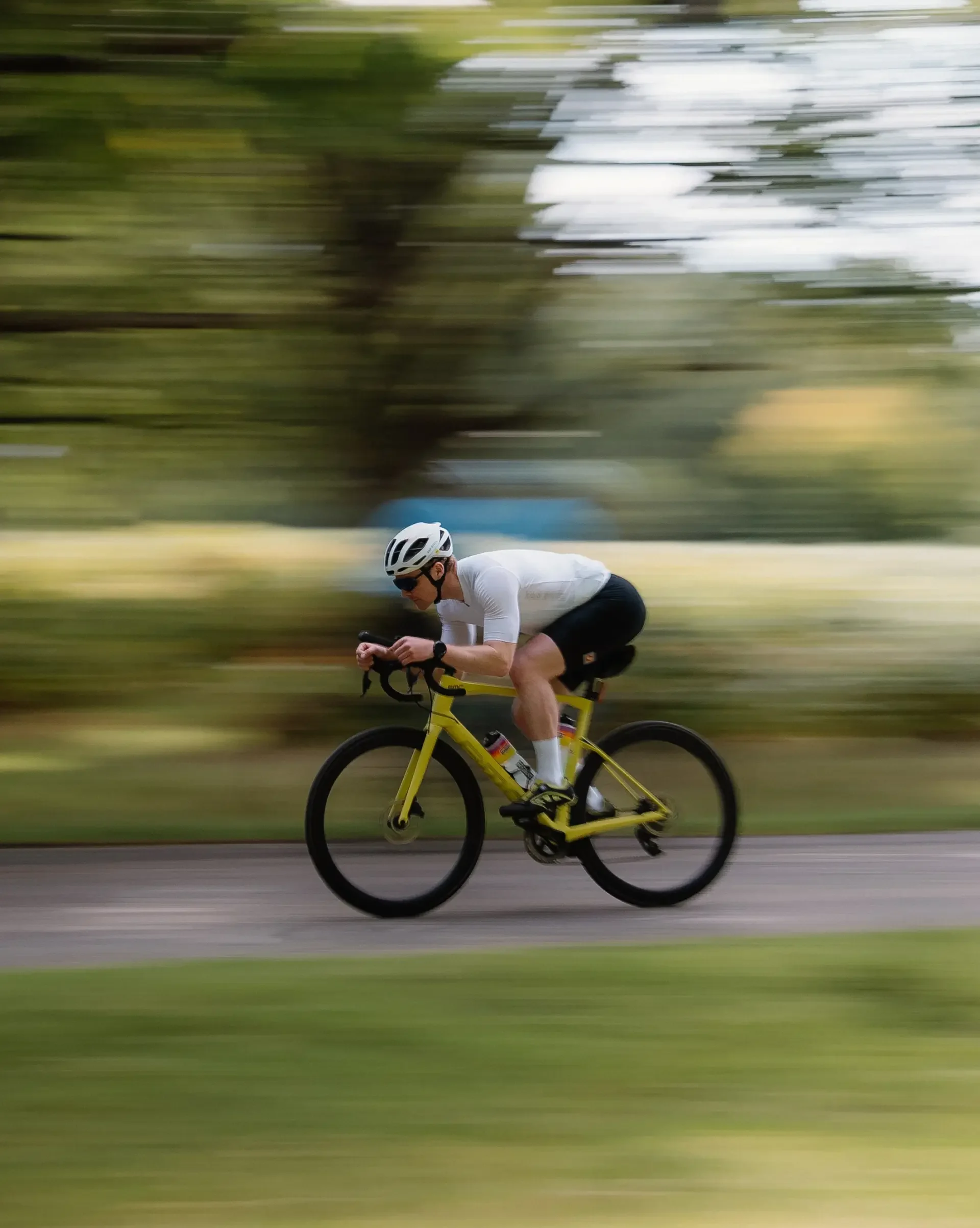
Fuelling on the bike is a skill in its own right, and it’s well worth practising if you’re not confident handling the bike yet.
- Start with a drink mix. Grabbing a bottle is easier than unwrapping a gel when you’re not confident on the bike, and it covers carbs and fluid in one go.
- Sip little and often. A few sips every 5–10 minutes is safer than relying on one gel every 30 minutes, which is easy to miss on a hill or a corner.
- Use the course. Fuel on gentle uphills, when you’re going slower and it feels safer.
- Set a reminder. An alert on your watch or bike computer keeps you on schedule.
- Practise in race conditions. Use similar kit, terrain and elevation wherever you can.
Once you’re comfortable, build a simple system: a solid option early on the bike (like a bar or chews), gels if you get on well with them, and a drink mix for carbs and fluid.
How much should you drink during a sprint or Olympic triathlon?
For most people, drinking to thirst is enough, but in warm conditions during an Olympic distance race you should aim for 400-600ml per hour.
Before the race:
- Drink 5-7ml of fluid per kg of body weight in the morning, which works out at 400-800ml for most people.
- You don’t need to down three litres of water, because you don’t want to feel heavy and sloshy on the start line.
- Check your urine colour.
During a sprint triathlon:
- Sip to thirst.
- Carry a bottle on the bike and take a drink or two at the run aid stations.
During an Olympic triathlon:
- Sipping to thirst is usually still enough.
- If it’s around 18-20°C or warmer, aim for roughly 400-600ml per hour.
- For more precision, weigh yourself before and after a training session and aim to replace 50-75% of what you lose.
If you’re a slower finisher, racing in the middle of the day or racing in the heat, add a little salt, squash or an electrolyte tablet to your bottle. It can help fluid uptake, and let’s be honest, plain water isn’t everyone’s favourite.
How do you keep your race fuelling plan simple?
Keep your plan simple enough that you can say what you’re taking each hour without having to think about it.
Something like “hour one, this; hour two, that; on the run, a gel every 30 minutes” is all you need. Too much choice just complicates things, and plenty of athletes have finished Ironmans and ultras on one gel, one chew and one drink mix.
Know the basics, practise them until they’re second nature, and you’ll already be ahead of most people on the start line.
Frequently asked questions
What should I eat the night before a triathlon?
Stick to a familiar, carb-based meal you’ve eaten before hard training sessions, and avoid anything new, very high in fibre or very spicy.
Do I need gels for a sprint triathlon?
Not necessarily. A carb drink on the bike and a small pre-swim top-up is often enough for a sprint, while gels become more useful in Olympic distance races.
How many gels do I need for an Olympic triathlon?
It depends on your other fuel sources, but at 60g of carbs per hour, many athletes use a drink mix on the bike plus one gel every 30 minutes on the run. Check the carb content on your gel’s label and build your plan around that.
Should I take electrolytes in a sprint or Olympic triathlon?
Usually only if it’s hot, you’re racing midday, or you expect to be out on the course for longer. Carbohydrate and fluid matter more at these distances.
When should I practise my race nutrition?
Practise it on long rides, brick sessions and race-simulation workouts, using the exact products you plan to race with.
The bottom line
Fuelling your first sprint or Olympic triathlon doesn’t need to be complicated. Eat a familiar, carb-based breakfast, top up before the swim, aim for around 60g of carbs per hour on the bike and run, drink to thirst, and never try anything new on race day.
Want help fuelling and training for your first triathlon?
Nutrition is just one piece of the puzzle. At OMNIA, our coaches build structured, flexible plans around your goals, your schedule and your life, covering training, strength and fuelling.
Want to learn more about hybrid training? Download our free hybrid training guide here
 How To Nail Your Ironman Nutrition
 The Metrics That Actually Matter
 How to Warm Up as a Hybrid Athlete