
Running Tips for Heavier Runners:
4 Things I’ve Learned at 200+ lbs
By Fergus Crawley, Founder and Head Coach at OMNIA
Shout out to all my thicker runners, because this one’s for you.
If you’re a bigger athlete, running can feel a lot harder for you than it seems to be for everyone else, and that’s not in your head. Most running advice is written for one body type, and it probably isn’t yours.
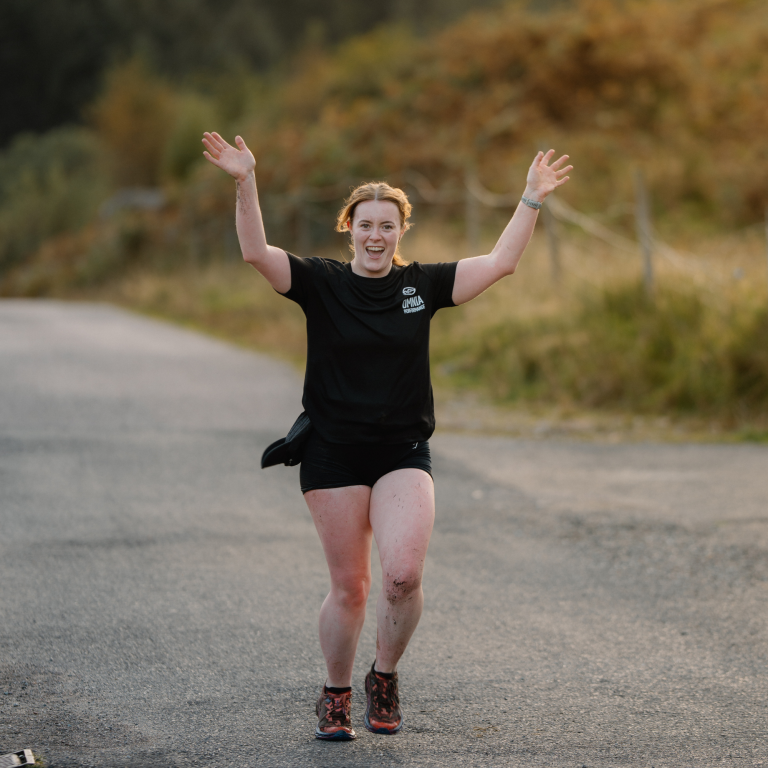
I’ve spent the best part of 10 years at 200 to 215 lbs (roughly 91 to 97 kg) and run thousands of kilometres in that time, so here’s what has actually helped me and the athletes we coach.
The short version
- Heavier runners can absolutely run well. You don’t need a “runner’s body” to chase PBs.
- Build your running volume slowly. Going too hard, too soon is the biggest mistake I see.
- Sort your chafing with lined shorts or undershorts and anti-friction (chamois) cream.
- Generic fuelling and sodium advice probably isn’t built for you, so test and track your own needs.
- Avoid overstriding by aiming to land directly below your hips and shoulders.
- Use Zone 2 training to build your aerobic base before you add pace work.
What counts as a heavier runner?
A heavier runner is anyone carrying more body weight than the typical runner, whether that’s extra body fat, muscle from a weightlifting or gym sport background, or simply a bigger frame.
My YouTube mate Mark Lewis has spoken openly about how hard it was to get into running at 250 lbs (about 113 kg) and 6’6″ (198 cm). If any of that sounds like you, keep reading.
Can you be a heavier runner and still run well?
Yes, absolutely.
From a young age, we’re told there’s one runner’s body and that’s what we should aim to look like. That’s fair enough if you’re chasing an Olympic final, but for the rest of us it just leaves us confused about whether running is even for us.
For some context, here’s what I’ve done at this body weight:
| Achievement | Result |
|---|---|
| Longest run | 100 miles in just over 22 hours 15 minutes |
| 5K PB | 17:37 |
| Marathon | 3:17 (a training run rather than a best effort) |
| Fastest mile | 4:58, on the same day as a 500 lb (about 227 kg) back squat |
You don’t have to be genetically built for running to get out there and chase PBs of your own.
1. How fast should heavier runners build their running volume?
Slowly, because the biggest mistake I see is going too hard, too soon.
Running is a skill, and it takes time both to learn to move efficiently and to adapt to the fatigue that comes with it. Start steady and build your volume gradually rather than diving in head first, especially if your body is carrying more load with every stride. (And don’t skip your prep, either. Here’s how to warm up as a hybrid athlete without wasting half your session.)
That’s exactly why having a plan matters. If you want that structure, it’s what our 1:1 coaching at OMNIA is built around.
2. What practical problems do heavier runners need to sort?
For heavier runners, chafing, kit fit and fuelling come up more than anything else, so it pays to get ahead of them early.
How do you stop chafing when running?
The best way to stop chafing is to wear shorts with a built-in liner (or undershorts) and use anti-friction cream on longer runs.
You’ll never catch me running without a liner in my shorts. That could be a 2-in-1 short like the Gymshark Speed 2-in-1 or a pair of undershorts under your normal ones, and honestly, whatever stops the chafing is worth it.
Next up is chamois cream, which is basically anti-friction cream and the same stuff Tour de France cyclists use. On long endurance sessions, it’ll be your best friend.
What is the best trail running pack for a bigger upper body?
The best pack is the one that fits your frame, and for me, the Osprey Duro 6 and 15 have worked well.
Some Salomon packs didn’t sit right around my back and shoulders, but I’m not recommending one brand over another. These packs are generally designed for conventionally built runners, so shop around and try them on before you commit.
How should heavier runners approach hydration and nutrition?
Heavier runners should test their own fuelling and sodium needs, because most generic advice online isn’t built for bigger bodies.
You’ve got more body weight to move, more heat to get rid of and more energy expenditure to fuel. So:
- Do a sweat test if you can. They’re available through various organisations in the UK and the US.
- Experiment with your sodium, nutrition and hydration on long runs and big sessions.
- Take notes on how you respond, so you find what works for you rather than what works for a forum’s average.
3. How can heavier runners improve their running technique?
The name of the game in running is efficiency, and one small change to your technique can pay off massively down the line.
If you come from a lifting background, you already know this. Moving weight through an inefficient movement pattern builds a motor pattern that won’t serve your long-term strength, and running works exactly the same way, so nail the technique first and build from the ground up.
With an efficient stride length and cadence, you can run the same pace at a lower heart rate and with lower oxygen consumption. That means a lower energy cost for every kilometre, and it helps protect you from injury too.
What is overstriding, and why does it matter?
Overstriding is when your heel lands out in front of your body with your knee extended and your leg straight ahead of you, and it’s the biggest injury risk in running.
That position can increase your risk of patellofemoral pain, better known as runner’s knee, which is one of the most common running injuries out there. What you want instead is an impact point directly below your hips and shoulders. My technique is far from perfect, but it’s a lot better than it used to be.
How can you tell if you’re overstriding?
The easiest way to tell is to put on a pair of barefoot shoes (like Vivobarefoot) and do some strides at a quick pace, because if you’re overstriding you’ll feel it straight away.
Conventional running shoes have cushioning that disguises the problem, whereas barefoot shoes make you far more aware of how you’re interacting with the ground.
4. Why should heavier runners use Zone 2 training?
Zone 2 is the heart rate zone that builds your aerobic capacity, and that capacity underpins your ability to adapt to and tolerate training volume, which makes it the foundation of your fitness.
It’s also your best defence against the classic mistake of heading out on your first run in years and trying to go sub-20 for 5K. Do that and you might join the many people who tore a calf in lockdown and ended up paying for their physio’s holiday.
So build steadily. Start slow, accumulate volume, and only then add pace work like 5K efforts and 800m repeats on the track.
How do you know if you’re in Zone 2?
There are three simple ways to check:
- Heart rate: use a sports watch or chest strap and set your zones.
- The talk test: if you can hold a conversation while you run, you’re probably working aerobically.
- Nasal breathing: if you can breathe only through your nose, you’re naturally regulating your pace and staying aerobic.
For a deeper dive, read how to build your aerobic base.
Frequently asked questions
Can you run if you’re over 200 lbs?
Yes. Body type doesn’t decide whether you can run. Build your volume gradually, get your kit right, work on your technique and use Zone 2 training to build a base.
Is running harder for heavier people?
It can feel harder, because heavier runners have more body weight to move, more heat to get rid of and more energy to fuel. Building volume slowly and running efficiently makes a big difference.
How do I stop chafing when I run?
Wear shorts with a built-in liner or undershorts, and use anti-friction (chamois) cream on longer efforts.
What is the best way for heavier runners to avoid injury?
Progress your running volume gradually and pay attention to your technique. Overstriding is the biggest injury risk and is linked to runner’s knee.
Do heavier runners need more sodium and fuel?
Often, yes, but it varies from person to person. A sweat test and experimenting on long runs will tell you far more than generic advice.
How do I know if I’m in Zone 2?
Use a heart rate monitor, the talk test (can you hold a conversation?) or nasal breathing.
Can weightlifters get into running?
Yes. Start with easy, steady running, build your volume gradually and treat technique the way you would a lift by getting the movement pattern right first.
The bottom line
Running as a heavier athlete isn’t about fitting a mould. It’s about building slowly, sorting the practical stuff, moving efficiently and laying down a solid aerobic base, and if you do those things, you’ll be surprised at what your body can do.
Want a plan built around your body and your goals?
That’s exactly what we do at OMNIA: expert coaching from people who’ve done the miles at this size and know what it takes.
Find out more about OMNIA 1:1 Coaching
Or, if you’d like an introduction to hybrid training, you can download our free hybrid training guide here.
 How To Nail Your Ironman Nutrition
 The Metrics That Actually Matter
 How to Warm Up as a Hybrid Athlete