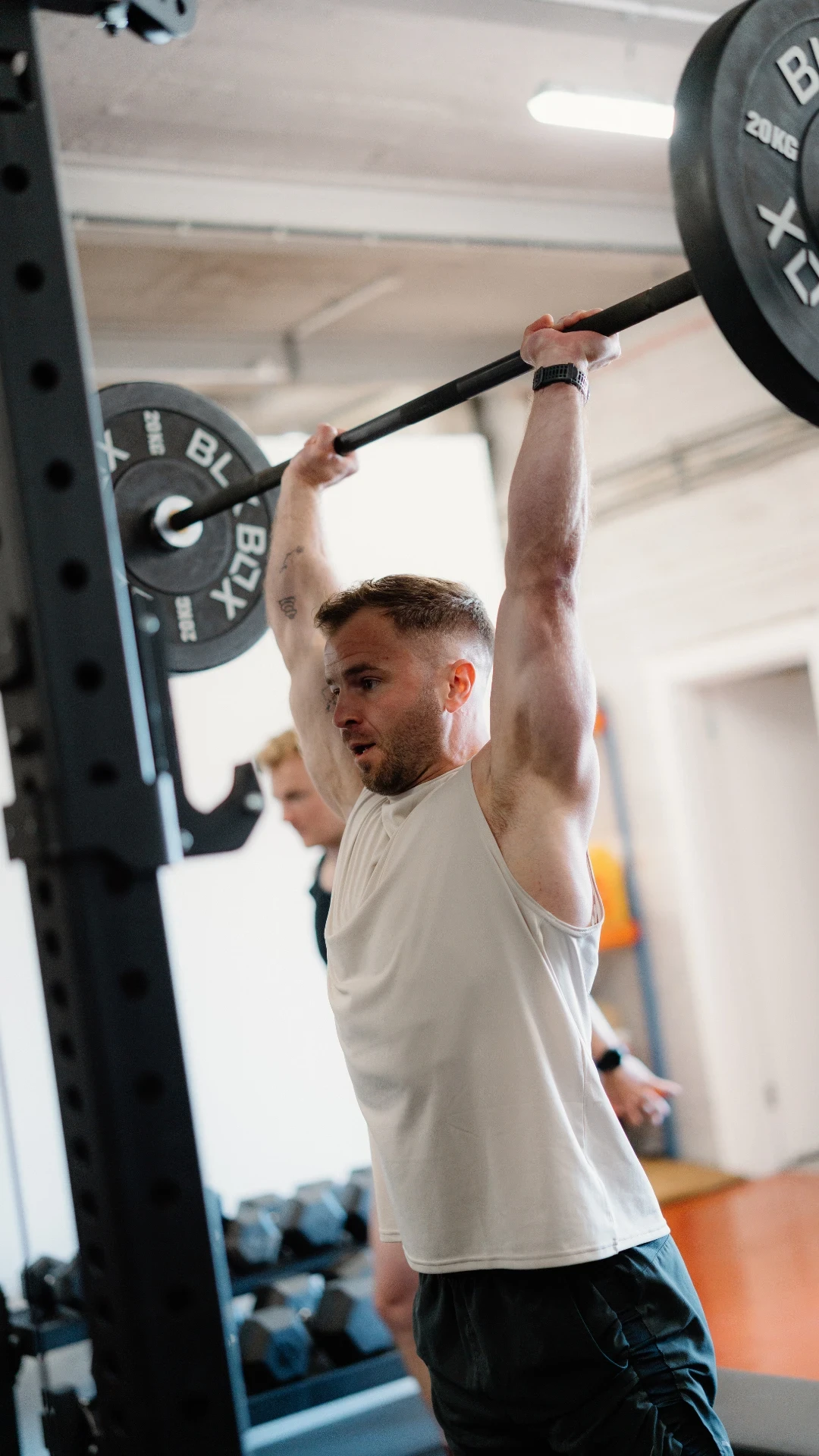
The idea that you have to pick a side – strength or endurance – is outdated.
You can absolutely run marathons and lift heavy. You can get strong without ditching your running volume. You can absolutely build muscle and still have the necessary lungs to go run long. Training properly as a hybrid athlete is what makes that possible, and it’s what we do best.
Whether you’re a seasoned gym goer who’s looking to took off their first marathon, or a veteran runner who wants to build a stronger, more resilient body, here’s what you need to know.
Why combine strength and marathon training?
Simply put – because it works.
- You’ll run better. Lifting, when done right, improves your running economy – running at a given speed for less oxygen cost.
- You’ll get injured less. A stronger body is more robust when put under load, whether that’s during a long run, speed work, or just squatting under a heavy barbell
- You’ll feel like a well-rounded athlete who can handle anything
We’ve coached thousands of athletes around the world be able to get strong and run long, and here’s what we’ve learned across our combined decades of coaching experience and education:
You don’t just bolt two training plans together
This is the classic mistake most folks make. You take your current lifting plan, download a marathon plan, pair the two together and hope for the best.
Sadly, this doesn’t work.
You’ll likely burn out, fall short on both, or get injured. Proper training as a hybrid athlete requires planning around your key sessions, consolidating your stress across the week, and a respect for the minimum effective doses – i.e. the minimum amount of work needed to improve on a certain quality, and then adjusting from there as needed.
You need to periodise properly
You can’t push everything aggressively at once. Trying to build both strength and endurance at the same time likely requires some degree of overload – applying a greater and greater stress over time to drive those gains. However, do this at too great a rate for both strength and endurance and you’ll struggle to recover to actually realise those fitness gains.
Instead, you’ve got to be smart and structure things a little better. For example, you could…
- Build a wide aerobic base first with plenty of easy running as defined by maintaining a low heart rate throughout.
- Have hypertrophy work and any higher rep work with higher volumes early on in the training block.
- Shift towards more race specificity (intervals/blocks of time spent at marathon pace) later in the training block.
- Shift towards more heavier lifting that’s closer to your 1RM later in the block, at lower volumes.
- Deload occasionally to let fatigue reduce and perform testing protocols, such as lactate threshold tests, to keep an eye on where your training intensity needs to be at.
Respect your recovery
It’s all too easy to think training is all about just looking at what’s on your program. But what’s going on the REST of your time is key too. A lot of the folks we work with have higher energy demands due to often carrying around a higher level of muscle mass compared to your average marathon runner, therefore it’s really important to be getting in enough calories, particularly carbohydrates. This will help you recover, ready for your next session.
Other recovery interventions to focus on are:
- Not training so unnecessarily hard that you need to focus so intently on recovery in the first place
- Getting enough quality sleep
- Keeping life stress under as much control as you can
- Engaging in more relaxing behaviours that are restorative, such as walking whilst listening to music or podcasts, socialising, napping etc.
Engage in an appropriate number of sessions per week
Most people manage to get strong and marathon ready on:
- 3-5 run sessions (1-3 easy runs, 1 long run and 1-2 interval or tempo runs)
- 2-3 gym sessions (depending on your base level of strength and available time)
All of these sessions should have purpose and clear objectives, and build as part of an overall plan over time.
What does hybrid marathon training actually look like?
Here’s a sample week from one of our Strength + Marathon Program:
Monday
Lower body strength + 3 x 1200m intervals @ ~5k race pace w/2 mins recovery
Tuesday
Upper body strength + 30 minutes easy run
Wednesday
Fartlek interval session, some intervals above threshold pace, some under. Each interval 3-7 minutes long
Thursday
Rest
Friday
Full body strength
Saturday
2 hours 10 minutes long run
Sunday
Rest
The internal structure of the program, i.e. the loads lifted and the pace you run at has some flex based on your ability, but the above gives you a very good idea of how we build things out.
The Bottom Line
You absolutely do not have to choose.
You can run a marathon and get strong doing it. You can be fast, durable, muscular, strong and aerobically fit, all at once.
The key? Smart programming, proper recovery, and clear goals.
At Omnia, we coach athletes across the world to do just that. If you’re ready to chase something bigger, without giving up what you love, our training model was built for you.
Download Our Free Hybrid Training Guide
Want the full breakdown?
Grab your copy of The Omnia Hybrid Training Guide here
 VO2 Max Explained: What Hybrid Athletes Need to Know
 The Metrics That ACTUALLY Matter
 How To IMPROVE Your Cycling