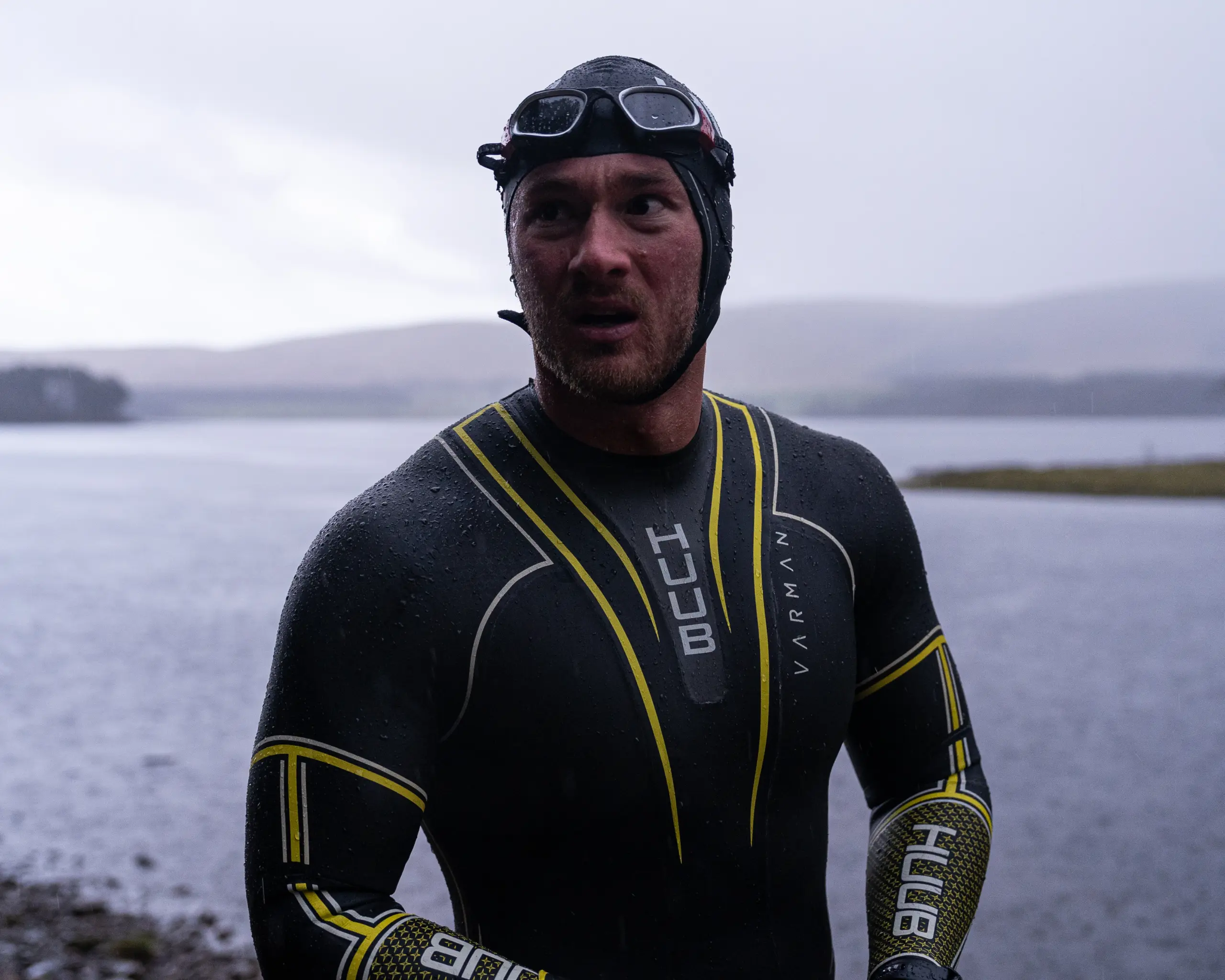
If you’ve ever quit on a hard effort, stopped mid-interval, stepped off the treadmill, walked the last mile, and told yourself you just don’t have what it takes, here’s what I want you to know: you weren’t weak. You just didn’t have the tools yet.
Mental toughness is one of the most talked-about and least understood qualities in sport. People throw the term around constantly, but when you actually look at the research, and at the athletes who genuinely have it what you find is that it’s nothing like the personality trait most people assume it to be.
It’s a skill. A trainable one. Built the same way every other performance quality is built: through progressive exposure, over time, until what used to be your ceiling becomes your floor.
I know this for a fact. Because I’ve experienced exactly what it feels like to be thrown into a hard situation without it.
The Hill I Still Think About
I was 16. Military college. I’d just been bumped up a pace group on the cross-country team – which sounds like progress until you realise the jump was massive.
We hit the hill on one of the later reps. The group held pace. And something in me just snapped.
I stopped. Did the walk of shame back to the finish line, way behind the group, not even close.
And if you’ve ever been in that situation, you know there are two very different types of suffering. There’s the pain of pushing yourself to your actual limit. And then there’s what I felt that day – the attached sense of failure. The voice saying: I’m just not built like them.
What I now know ( looking back with more emotional maturity) is that I wasn’t weak. I simply didn’t have the skill set or the experience to draw upon to push through. Realistically, I probably wasn’t working anywhere near my true capacity. But I had no way of knowing that. No stack of hard efforts to point at and say, I’ve been here before and I survived.
When it’s your first time doing something hard, that’s often where people cut themselves short, not from lack of talent, but from lack of reference.
The Three Types of Mental Toughness
Here’s where most athletes go wrong: they train one type and expect it to carry them through everything else. It doesn’t work that way. The demands are completely different depending on what you’re doing and so are the tools.
Type 1: The Acute Effort The 5K. The mile rep. The interval. The kind of pain that makes beginners hate running – heart pounding out of your chest, can’t get more uncomfortable.
The tool: chunking. When I ran my 10K PB, somewhere between kilometre five and eight I wasn’t thinking about the finish line. I was doing mental math. Estimating 200 metres at a time. Telling myself: get to that corner at this pace and you can slow down. Getting to the corner. Not slowing down. Repeating. Just enough mental occupation to take the edge off without costing you the effort.
Type 2: The Long Day The ultra. The marathon. The 12-hour effort where you’re never in agony, but fatigue, monotony, and emotion come in waves. These events are won or lost in your preparation for the bad moment and not your response to it.
The tool: expect the bad moment before it arrives. Every single person doing something this long will hit a point where they think, why am I doing this? Being surprised by it is where fit people fall apart. Being prepared for it (having your why ready before you need it) is the difference between finishing and not.
Type 3: The Multi-Day Military courses. Five-day ultras. Anything where you wake up and your feet are already wrecked before the day starts. The enemy here isn’t the effort…it’s the morning.
The tool: never quit in the morning. Legs sore, joints aching, don’t want to put your boots on – doesn’t matter. Just start. It is remarkable, every single time, how fast those feelings disappear once you’re moving. You never get to find that out if you don’t just start.
The Myth of Motivation
We’re living in the era of the massive challenge. Someone decides they’re doing a 100-miler, posts about how motivated they are, how badly they want it, how this time is different.
And then, somewhere in the midnight phase, head torch on, steep hill, legs gone, no crowd, no music, they find out what they’re actually made of. Which is almost always less than they thought.
Not because they weren’t tough enough. Because they hadn’t built it yet.
No amount of motivational videos, affirmations, or Goggins speeches on loop gets you through the midnight phase of an overnight ultra if you haven’t done the work prior.
Motivation shows up when things feel good and disappears exactly when you need it most. What actually works is your plateau of resilience. Every slightly harder session you’ve completed, every time you kept going when it would have been easier to stop, every cold morning you just started anyway. That stack of experience is the only thing that reliably carries you through.
How to Actually Build It
Start smaller than you think you should. If you bite off more than you can chew and are forced to quit, you’ve started building a habit of quitting. Every session where you set an expectation you don’t meet makes the next failure easier. The solution isn’t more grit… it’s a smarter progression. Slightly harder, slightly longer, over time. Never overwhelming. Always earning the next step.
Build the evidence base. Keep training logs. Scroll back through your calendar on hard days. Look at how much you’ve done. Ask yourself: how can someone who has done that many sessions consistently, who has followed through on their word, be unprepared? The tangible proof of your preparation is one of the most powerful tools you have when doubt arrives and it will arrive.
Train without music sometimes. Long events are often won or lost in the ability to sit with your own thoughts for hours. If you only ever train with music, you’ll never build the capacity to be present with the discomfort and monotony that comes with long efforts.
Plan for the bad moment before it arrives. Write down what you’ll do when things get tough. A mantra, a reason, a physical reminder. The athletes who crack are almost always the ones who were surprised by how bad it got. The athletes who finish are the ones who expected it and had a plan.
Use deferred quitting. Give yourself an out you never take. Tell yourself: if you want to quit, you can quit at the top of this hill. At the end of this rep. In the evening, not the morning. By the time you get there, the moment has usually passed and you never would have found that out if you hadn’t just started.
The Shrinking Gap
One of the things athletes are most surprised by as they develop mentally is the narrowing gap between their floor and their ceiling. Early on, everything depends on a perfect day. One bad night and the whole thing falls apart.
As you build the stack, that changes. Not just because you’re fitter, but because you have proof that you can perform under suboptimal conditions. You’ve done it before. You know it’s possible. And that knowledge turns what used to be an excuse into just another variable.
My best 2K time was 6:11. But I knew no matter how tired I was, I could get close to that. Because I’d done it tired, many times. And that certainty is only available to the person who has built the log, stacked the evidence, and earned the right to know what they’re capable of.
Mental toughness is not unlocked overnight. You will not suddenly be super mentally tough because you read this article. But you now have the tools to go out and stack some of that experience. Use them. Do slightly harder things. Build the evidence. And over time, your window of what’s tolerable will keep quietly expanding, until what used to be your ceiling is just where you start.
At OMNIA, we believe in not just getting physically strong, but also building mental strength.
Curious to find out what you’re capable of?
 Project TENacity
 How Hypertrophy Works
 Cut or Bulk?